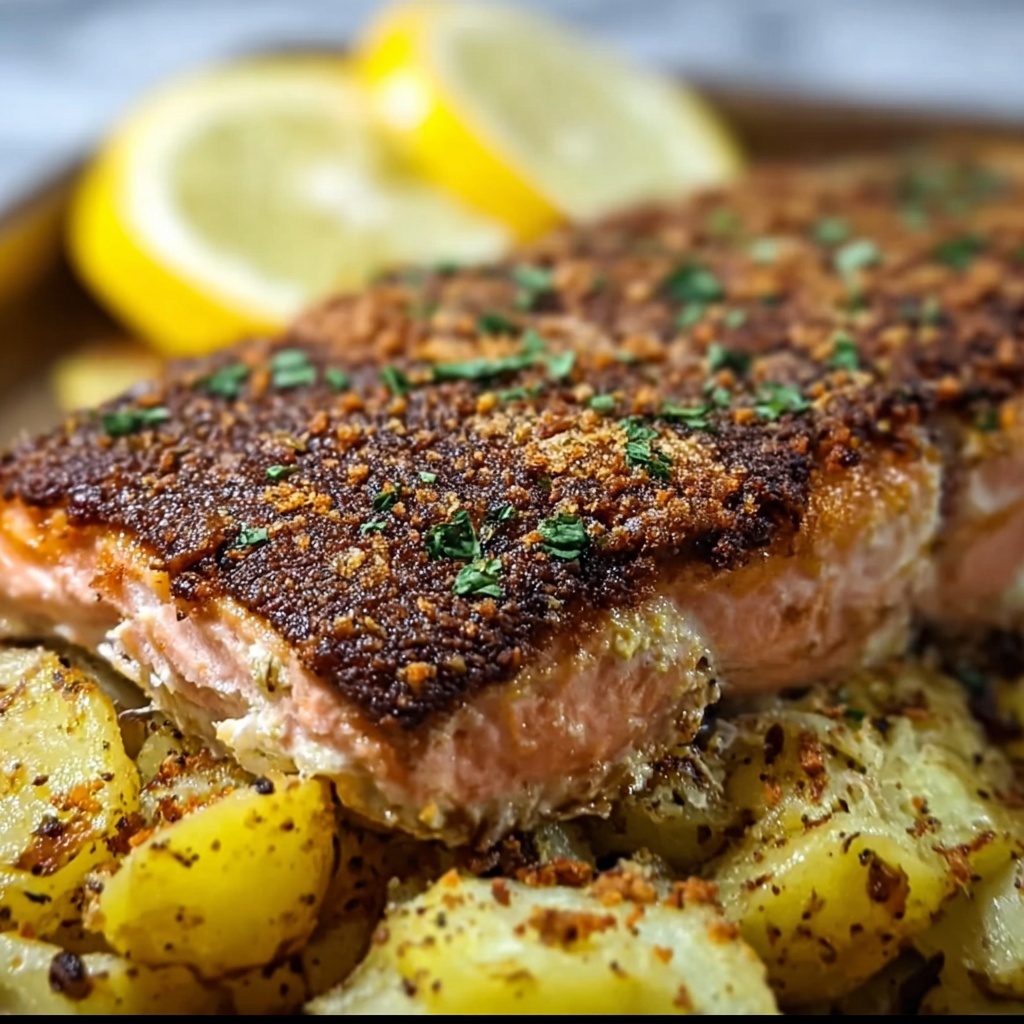
If you’re looking for a dish that feels both luxurious and comforting, the Potato-Crusted Salmon: A Crispy and Elegant Dinner Recipe is an absolute showstopper. This recipe transforms simple ingredients into a masterpiece where flaky, tender salmon meets a golden, crispy potato crust. With the tang of Dijon mustard and the fresh touch of dill, every bite brings a wonderful harmony of flavors and textures. It’s perfect for impressing guests or treating yourself to a special meal that’s surprisingly easy to make.
Ingredients You’ll Need
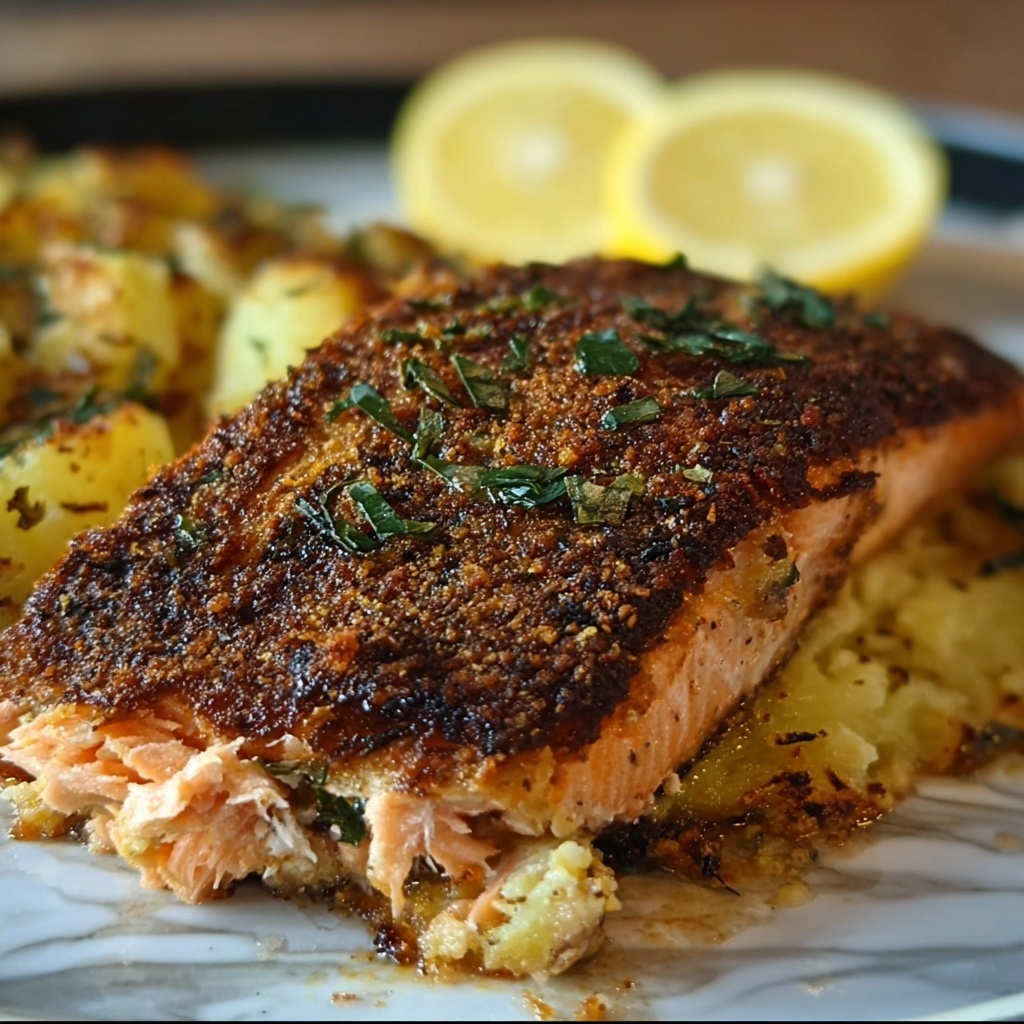
Each ingredient in this recipe plays a crucial role, from the rich, buttery salmon to the crispy potato crust that gives the dish its signature crunch. These straightforward components combine to create an elegant plate packed with flavor and satisfying texture.
- Salmon fillets (4, about 6 oz each): Choose fresh, firm fillets for the best flavor and texture.
- Potatoes (2 medium-sized, Yukon Gold or Russet): Peeled and grated to create that irresistible crispy crust.
- Olive oil (2 tablespoons): Adds richness and helps crisp the potato crust to perfection.
- Dijon mustard (1 tablespoon): A sharp, tangy layer under the potatoes that complements the salmon flawlessly.
- Fresh dill (1 tablespoon chopped, or 1 teaspoon dried): Brings a fresh, herbal brightness that lightens the dish.
- Salt and pepper: Essential seasoning to enhance all the natural flavors.
- Butter (2 tablespoons): Adds a luscious, nutty aroma while cooking the salmon.
- Lemon slices: For garnish, adding a zesty pop to finish the dish.
How to Make Potato-Crusted Salmon: A Crispy and Elegant Dinner Recipe
Step 1: Prepare the Potato Crust
Start by grating the potatoes using a box grater or food processor. The key here is to remove as much moisture as possible—this ensures the crust will crisp up beautifully rather than steam. Wrapping the grated potatoes in a clean kitchen towel and squeezing firmly is your best bet to achieve this perfect texture. Once dry, season the potatoes with salt and pepper, setting the stage for that savory crust.
Step 2: Season the Salmon
Pat your salmon fillets dry to ensure the mustard adheres well. A thin layer of Dijon mustard spreads over the top forms a flavorful base that pairs wonderfully with dill. Sprinkle the fresh or dried dill evenly, then add salt and pepper. This simple seasoning elevates the natural richness of the salmon, creating flavor layers that complement the crispy crust.
Step 3: Form the Potato Crust on the Salmon
Press a generous handful of the seasoned grated potatoes firmly onto the top of each salmon fillet. It’s important to press down hard so the potatoes attach securely, making sure they stay put during cooking. This step transforms the simple fillets into elegant little bundles crowned with a golden potato crust that will crisp up in the skillet.
Step 4: Cook the Potato-Crusted Salmon
Heat olive oil and butter together in a large nonstick skillet over medium-high heat, creating the perfect environment for crisping and flavor. Gently place the salmon fillets potato-side down and cook without moving them for 4 to 5 minutes. This patience pays off in a beautifully golden and crunchy potato crust that contrasts perfectly with the tender fish inside.
Step 5: Finish Cooking
Carefully flip each fillet and cook on the other side for 3 to 4 minutes until the salmon flakes easily with a fork. Pay attention to the thickness of your fillets, as cooking time may vary—but you want the fish cooked just right, moist and tender to the core, surrounded by that irresistible crust.
Step 6: Serve and Garnish
Serve your Potato-Crusted Salmon: A Crispy and Elegant Dinner Recipe immediately while hot, garnished with fresh lemon slices and an extra sprinkle of dill if you like. The citrus brightness cuts through the richness, making every bite delightful and fresh.
How to Serve Potato-Crusted Salmon: A Crispy and Elegant Dinner Recipe
Garnishes
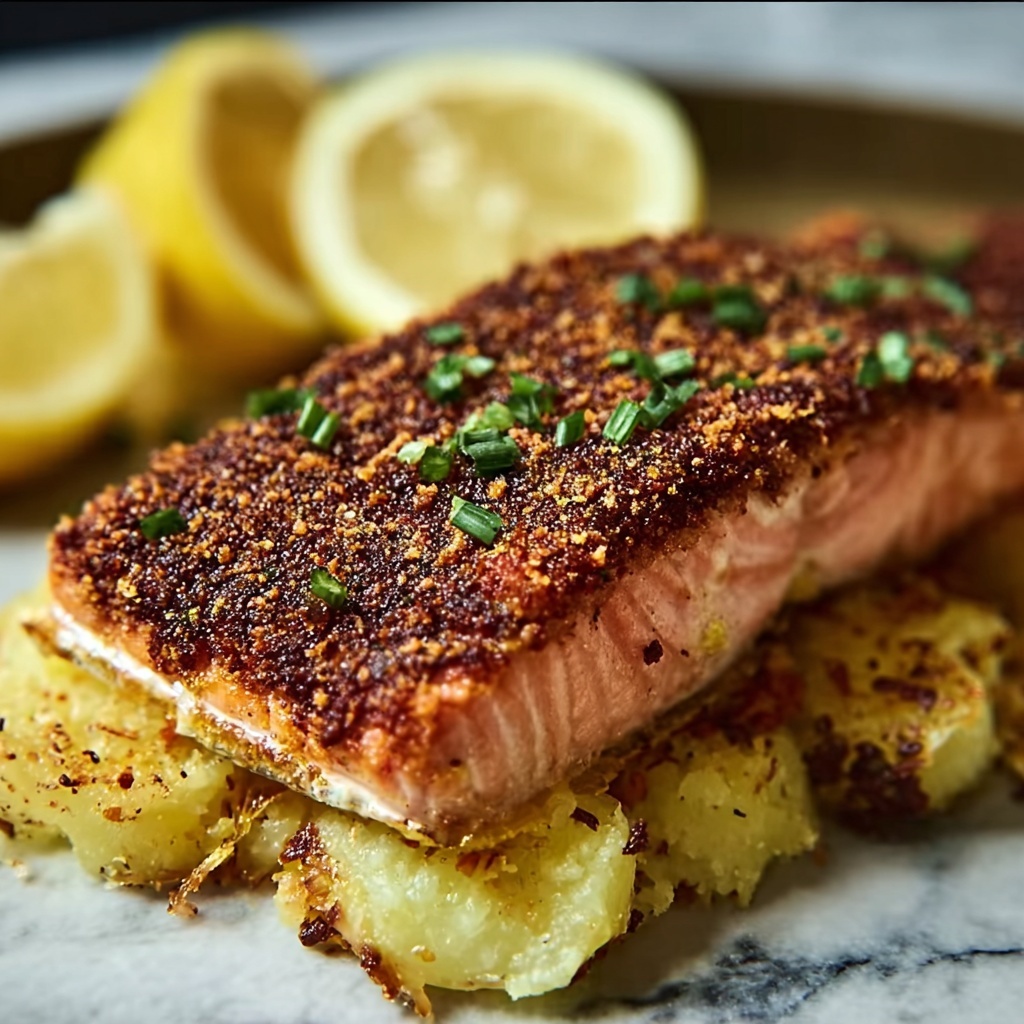
Brighten the dish with fresh lemon slices and a sprinkle of chopped dill. A light drizzle of lemon juice just before eating gives a subtle tang that complements the crispy potato and rich salmon beautifully, making the entire dish feel fresh and inviting.
Side Dishes
This potato-crusted salmon pairs elegantly with roasted vegetables, like asparagus or carrots, which add color and a caramelized flavor contrast. You can also serve it alongside a simple mixed green salad tossed in a light vinaigrette to balance out the richness without overwhelming the palate.
Creative Ways to Present
For a fancy presentation, use a ring mold to plate alongside a dollop of herbed crème fraîche or a delicate cucumber salad. Plating the salmon atop a bed of creamy mashed potatoes or a simple risotto also adds a comforting, restaurant-quality touch that elevates the meal visually and in flavor.
Make Ahead and Storage
Storing Leftovers
Leftover Potato-Crusted Salmon can be stored in an airtight container in the refrigerator for up to 2 days. Keep the crust on top to retain its texture as much as possible, but note the crispiness may soften slightly upon storage.
Freezing
For freezing, place the cooked fillets on a baking sheet to freeze individually, then transfer to a freezer-safe container or bag. It’s best to consume within one month for optimal flavor and texture. Thaw overnight in the fridge before reheating.
Reheating
Reheat gently in a low oven (around 300°F/150°C) for about 10-15 minutes to revive some of the crispiness. Avoid microwaving to prevent sogginess; a quick sauté in a hot skillet can also help bring the crust back to life while warming the salmon through.
FAQs
Can I use sweet potatoes instead of regular potatoes?
Absolutely! Sweet potatoes offer a slightly sweeter flavor and hold up well as a crust, though the texture may be a bit softer—worth experimenting if you want a unique twist.
What’s the best type of salmon for this recipe?
Fresh, wild-caught salmon tends to have the best flavor and firmness, but farm-raised can work too. Aim for thick fillets to get the perfect balance of crispy crust and tender fish.
Can I prepare the potato crust in advance?
You can grate and season the potatoes a few hours ahead, but wait to apply the crust until just before cooking to prevent them from browning or becoming watery.
Is it possible to bake instead of pan-searing?
Yes, you can bake the potato-crusted salmon on a greased baking sheet at 400°F (200°C) for about 15-20 minutes, but you might lose some crispiness compared to the skillet method.
How do I know when the salmon is perfectly cooked?
The salmon should flake easily with a fork but still appear moist and tender. Overcooking leads to dryness, so keep an eye on it, especially with thinner fillets.
Final Thoughts
Once you try the Potato-Crusted Salmon: A Crispy and Elegant Dinner Recipe, it’s hard not to fall in love with the balance of textures and flavors that come together so effortlessly. It’s a dish that feels special yet is wonderfully accessible, perfect for weeknight dinners or impressing company. Dive in and enjoy the crispy, flaky magic for yourself—you won’t regret it!
Print
Potato-Crusted Salmon: A Crispy and Elegant Dinner Recipe
- Prep Time: 10 minutes
- Cook Time: 8-9 minutes
- Total Time: 18-19 minutes
- Yield: 4 servings
- Category: Main Course
- Method: Frying
- Cuisine: American
Description
Potato-Crusted Salmon offers a delightful combination of crispy, golden potato crust and tender, flavorful salmon fillets. This elegant yet simple skillet-cooked dish is perfect for a nutritious weeknight dinner or a special occasion meal, garnished with fresh dill and lemon for a refreshing finish.
Ingredients
Salmon and Potato Crust
- 4 salmon fillets (about 6 oz each)
- 2 medium-sized potatoes (Yukon Gold or Russet), peeled and grated
- 2 tablespoons olive oil
- 2 tablespoons butter
Seasoning
- 1 tablespoon Dijon mustard
- 1 tablespoon fresh dill, chopped (or 1 teaspoon dried dill)
- Salt and pepper, to taste
- 1 lemon, sliced (for garnish)
Instructions
- Prepare the Potatoes: Grate the potatoes using a box grater or food processor. Place the grated potatoes in a clean kitchen towel and squeeze out as much excess moisture as possible to ensure crispiness. Transfer the grated potatoes to a bowl and season with salt and pepper.
- Season the Salmon: Pat the salmon fillets dry using paper towels. Spread a thin layer of Dijon mustard over the top of each fillet to add flavor and help the potato crust adhere. Sprinkle the fresh or dried dill over the mustard-coated salmon and season with salt and pepper.
- Form the Potato Crust: Take a handful of the grated potatoes and press them firmly onto the top of each salmon fillet, creating an even crust. Press down well so the potatoes stick securely to the fish during cooking.
- Heat the Skillet: In a large nonstick skillet, heat the olive oil and butter together over medium-high heat until melted and hot.
- Cook Salmon Potato-Side Down: Carefully place the salmon fillets into the skillet with the potato crust facing down. Cook for about 4 to 5 minutes until the potato crust turns golden brown and crispy.
- Flip and Finish Cooking: Gently flip the salmon fillets over and cook for an additional 3 to 4 minutes, or until the salmon is cooked through and flakes easily with a fork. Cooking times may vary based on fillet thickness.
- Serve: Remove the salmon from the skillet and serve hot, garnished with lemon slices and a sprinkle of fresh dill if desired. This dish pairs wonderfully with a fresh salad or roasted vegetables.
Notes
- Make sure to thoroughly squeeze out excess moisture from the grated potatoes to achieve a crispy crust.
- You can substitute Yukon Gold potatoes with Russet potatoes if preferred.
- Adjust cooking time depending on the thickness of your salmon fillets to avoid overcooking.
- For a dairy-free option, omit the butter and increase olive oil slightly.
- Serve immediately to enjoy the crispy texture of the potato crust.