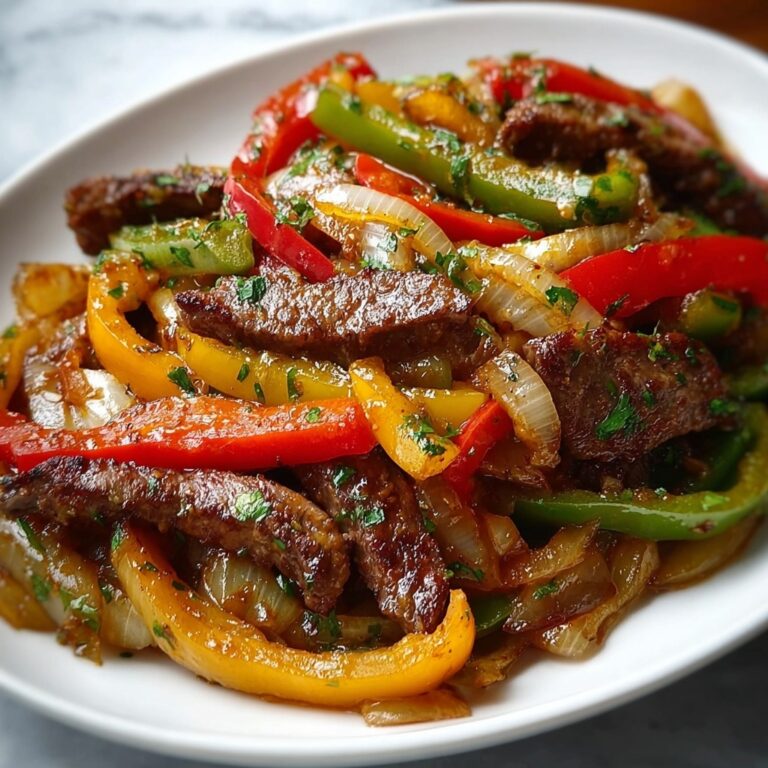
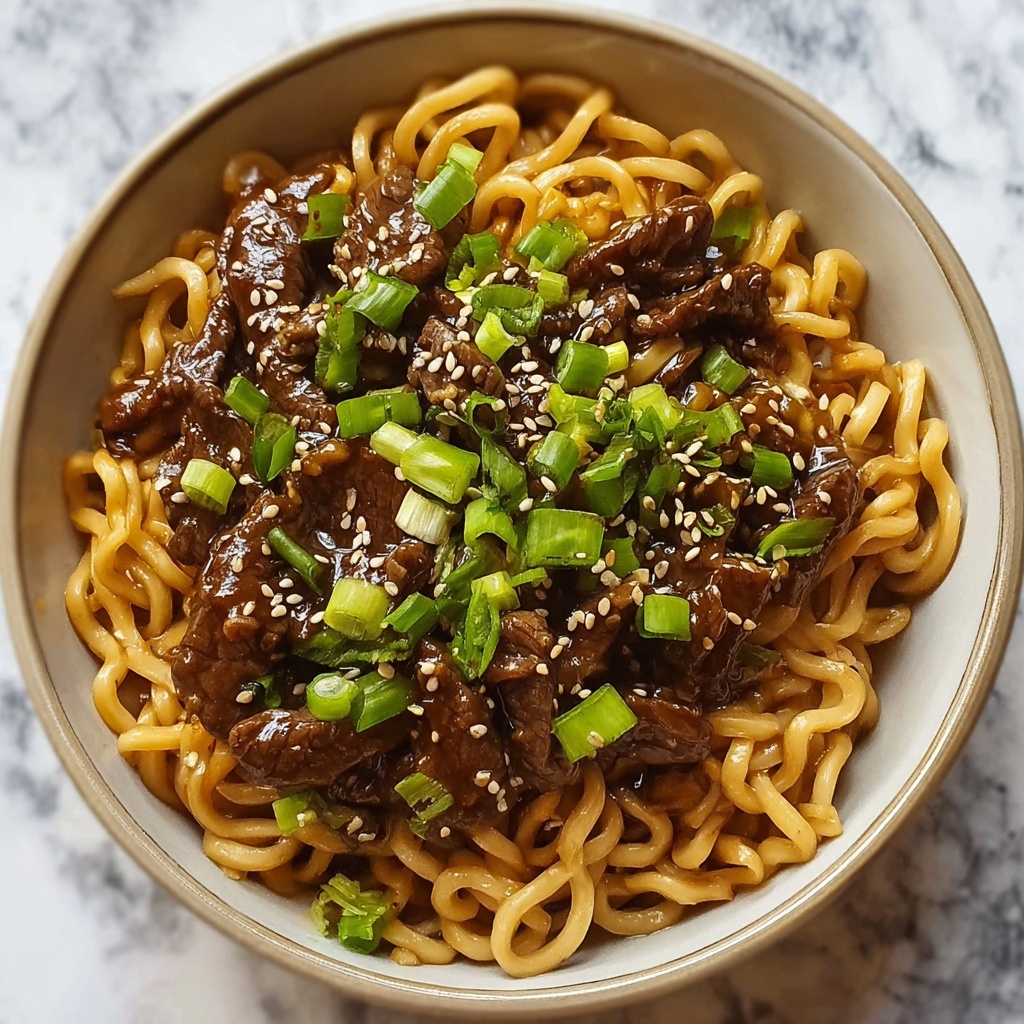
If you are craving a dish that bursts with flavor, satisfying textures, and comes together in a flash, this Mongolian Beef and Noodle Stir-Fry Recipe is exactly what you need in your life. Tender slices of beef glazed in a sweet-savory sauce mingle effortlessly with soft noodles and crisp vegetables, creating a perfect harmony that tastes just like your favorite takeout but homemade with love and fresh ingredients. This recipe manages to be both comforting and impressive, making it a go-to weeknight dinner or a crowd-pleaser for any occasion.
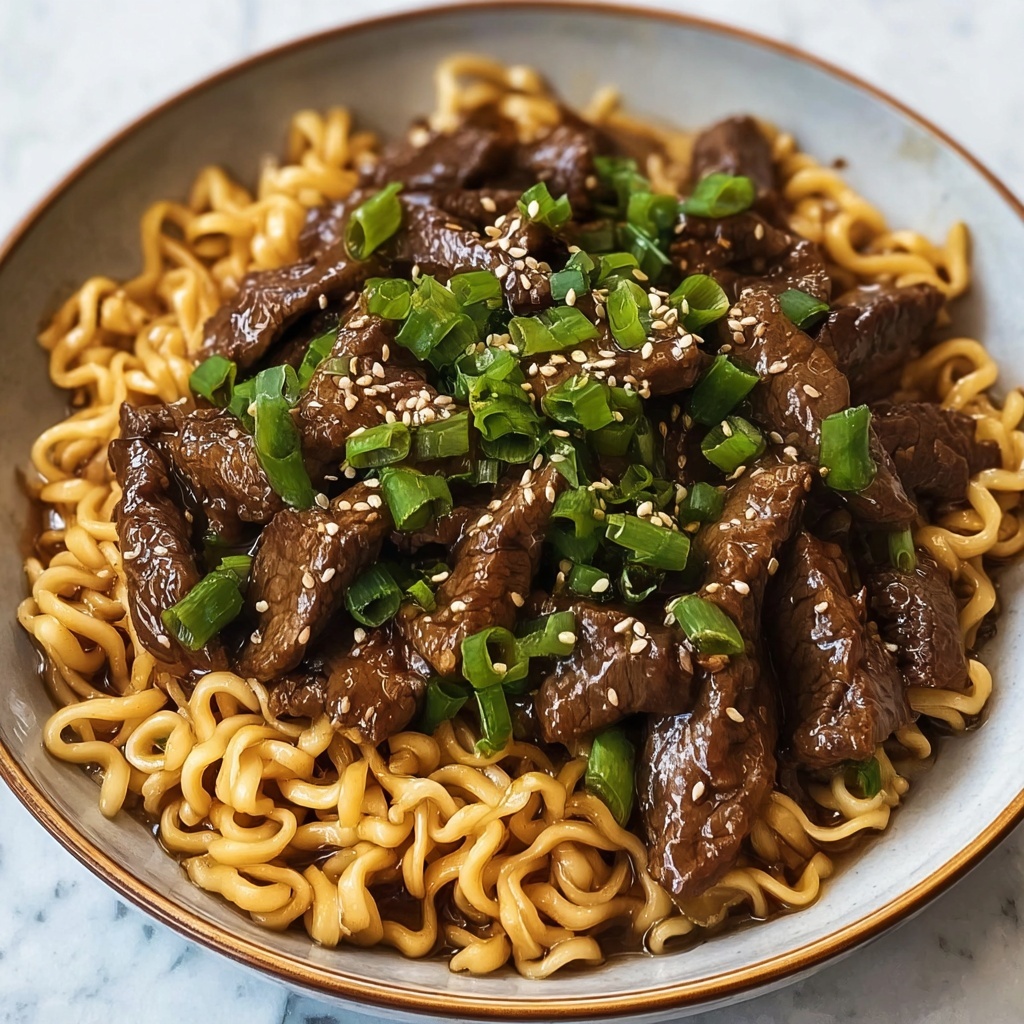
Ingredients You’ll Need
These ingredients are easy to find and each one plays an important role in building the rich flavor and pleasing texture of our Mongolian Beef and Noodle Stir-Fry Recipe. From the tender cuts of steak to the aromatic garlic and ginger, everything works together to create a balanced and irresistible dish.
- 1 lb flank steak or sirloin, thinly sliced against the grain: This ensures tender, juicy beef that soaks up the sauce perfectly.
- 2 tbsp cornstarch: Helps create a slight crust on the beef and thickens the sauce beautifully.
- 2 tbsp soy sauce: Adds umami depth to the beef marinade.
- ½ cup low-sodium soy sauce: The base of the stir-fry sauce, providing savory goodness.
- ⅓ cup brown sugar (packed): Balances the salty soy with just the right touch of sweetness.
- ¼ cup water: Keeps the sauce from becoming too thick and helps it coat the noodles and beef evenly.
- 2 cloves garlic, minced: Brings a fragrant sharpness that wakes up the dish.
- 1 tsp fresh ginger, grated (or ½ tsp ground ginger): Adds a warm, zesty note essential to Mongolian flavors.
- 1 tbsp hoisin sauce (optional): For a deeper, slightly tangy complexity if desired.
- ½ tsp red pepper flakes (optional): Injects a gentle heat to keep things exciting.
- 8 oz lo mein, udon, or spaghetti noodles, cooked and drained: Soft, chewy noodles provide the perfect base and soak up all the sauce.
- 1 tbsp vegetable oil (or sesame oil for extra flavor): Used for searing the beef and sautéing vegetables, adding richness and flair.
- 4 green onions, sliced into 1-inch pieces: Introduce a mild onion flavor and beautiful pops of color.
- 1 cup shredded carrots or thinly sliced bell peppers (optional): Add crunch, sweetness, and vibrant color.
- Sesame seeds & more green onions, for garnish: Finishing touches that bring texture and a hint of nuttiness to the dish.
How to Make Mongolian Beef and Noodle Stir-Fry Recipe
Step 1: Marinate the Beef
Start by tossing your thinly sliced flank steak or sirloin with cornstarch and a splash of soy sauce. This simple marinade tenderizes the beef and creates a slight coating that will crisp up beautifully when seared. Letting it rest for 10 to 15 minutes allows the flavors to meld and the texture to develop, setting the stage for that perfect sear.
Step 2: Whisk Together the Sauce
While the beef is marinating, mix the core sauce ingredients in a small bowl—soy sauce, brown sugar, water, minced garlic, grated ginger, hoisin sauce (if you choose to use it), and red pepper flakes. This quick blend forms the heart of your dish, balancing savory, sweet, and a hint of spice that will coat every bite with deliciousness.
Step 3: Sear the Beef
Heat your vegetable or sesame oil in a large skillet or wok over medium-high heat until shimmering. Add the beef in one layer (you might need to work in batches to avoid overcrowding). Sear each side for 1 to 2 minutes or until the beef is beautifully browned yet still juicy inside. Remove it from the pan and set aside—this step locks in flavor and texture beautifully.
Step 4: Cook the Aromatics and Vegetables
In the same pan, add a bit more oil if necessary, then toss in the sliced green onions and your choice of shredded carrots or bell peppers. Sauté for 1 to 2 minutes until the veggies soften slightly but retain a pleasant crunch. These aromatics bring fresh brightness and a lovely contrast to the rich beef and noodles.
Step 5: Bring It All Together
Return the seared beef to the pan and pour in your flavorful sauce. Stir everything around to coat the ingredients well. Let the sauce simmer gently for 2 to 3 minutes so it thickens just enough, allowing the beef and vegetables to soak up all those savory-sweet flavors. Finally, fold in the cooked noodles and toss until they are thoroughly coated and heated through.
Step 6: Serve Hot
Once everything is perfectly combined and steamy, transfer your Mongolian Beef and Noodle Stir-Fry Recipe to plates. Sprinkle generously with sesame seeds and extra green onions to add texture and a fresh burst of flavor. Serve immediately to enjoy it at its best—warm, comforting, and packed full of those crave-worthy Mongolian flavors.
How to Serve Mongolian Beef and Noodle Stir-Fry Recipe
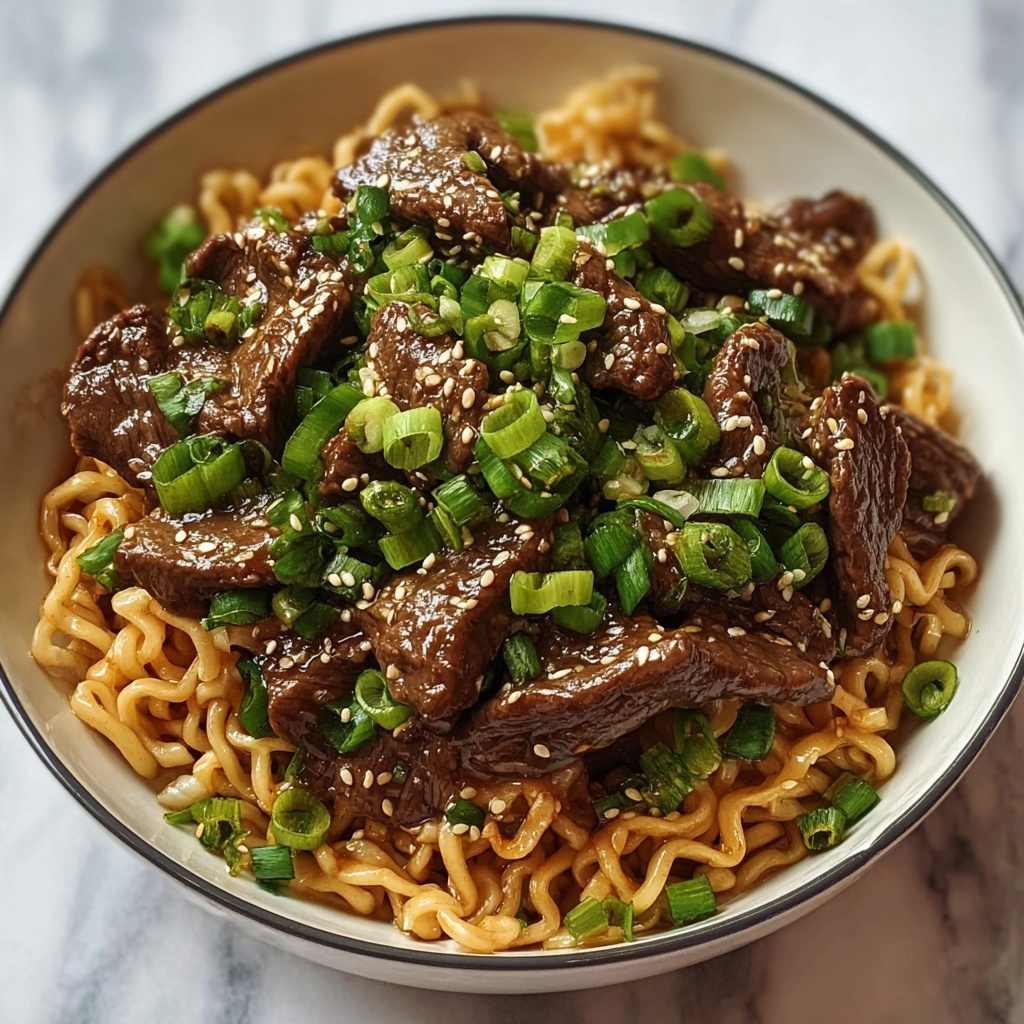
Garnishes
Don’t underestimate the power of garnishes! Fresh green onions sliced thinly add bright color and a subtle crunch, while toasted sesame seeds present a mild nuttiness and an extra pop of texture with every bite. You can also add a wedge of lime or a sprinkle of chopped cilantro for an additional fresh zing if you like.
Side Dishes
This recipe shines as a standalone meal, but pairing it with simple side dishes can elevate your experience. A crisp cucumber salad, steamed bok choy, or lightly stir-fried snow peas create refreshing contrasts. Steamed jasmine rice or a crunchy Asian slaw are also wonderful accompaniments that complement the savory richness of the beef and noodles.
Creative Ways to Present
For a fun presentation, serve this stir-fry in individual bowls for a cozy, family-style feel or style it buffet-style for casual gatherings. You can also sprinkle with crushed peanuts or chili flakes for extra texture and spice. Or try nestling the noodles in lettuce cups for a lighter, interactive way to enjoy this beloved Mongolian Beef and Noodle Stir-Fry Recipe.
Make Ahead and Storage
Storing Leftovers
Leftover Mongolian Beef and Noodle Stir-Fry Recipe keeps beautifully in an airtight container in the refrigerator for up to 3 days. Storing it properly ensures that the beef remains tender and the noodles don’t dry out, making it perfect for next-day lunches or quick dinners.
Freezing
You can freeze leftover stir-fry, but to maintain the best texture, it’s best to freeze the beef and sauce separately from the noodles and vegetables. Place cooled portions in sealed freezer bags or containers and consume within 2 months for optimal flavor. When ready, thaw overnight in the fridge before reheating.
Reheating
Reheat your leftovers gently over medium heat in a skillet to avoid drying out the beef. Adding a splash of water or broth can help loosen up the sauce and bring the noodles back to life. Avoid the microwave if possible to keep that lovely stir-fry texture intact, but if you must, heat in short bursts stirring in between.
FAQs
Can I use a different cut of beef?
Absolutely! While flank steak or sirloin are ideal for their tenderness and quick cooking, you can also use ribeye or skirt steak. Just be sure to slice thinly against the grain to maintain tenderness.
What type of noodles work best in this recipe?
Lo mein, udon, or even spaghetti noodles all work wonderfully here. The key is to cook them just until tender and drain well before tossing them in the sauce to absorb all those rich flavors.
Is hoisin sauce necessary?
Hoisin sauce is optional but highly recommended if you want to deepen the flavor profile and add a subtle sweetness and complexity. If you don’t have it, the sauce is still delicious without it.
How spicy is this dish? Can I adjust the heat?
The recipe includes red pepper flakes for a gentle kick, but you can easily adjust or omit them to suit your spice preference. Add fresh chili or hot sauce if you want to kick it up a notch.
Can I make this recipe vegetarian?
While this version highlights beef, you can substitute with tofu, tempeh, or mushrooms and use vegetable broth or soy sauce-based sauce for a plant-friendly twist that still captures the spirit of this Mongolian Beef and Noodle Stir-Fry Recipe.
Final Thoughts
This Mongolian Beef and Noodle Stir-Fry Recipe is one of those dishes that feels like a warm hug and a celebration all at once. It’s so rewarding to make at home with straightforward ingredients that come together quickly but deliver big on flavor. I promise once you try it, this recipe will have a permanent spot in your dinner rotation. So grab your wok, turn up the heat, and dive into this mouthwatering stir-fry adventure!
Print
Mongolian Beef and Noodle Stir-Fry Recipe
- Prep Time: 15 minutes
- Cook Time: 15 minutes
- Total Time: 30 minutes
- Yield: 4 servings
- Category: Main Course
- Method: Frying
- Cuisine: Asian, Chinese
Description
This Mongolian Beef and Noodle recipe features tender slices of flank steak seared to perfection and tossed in a flavorful, slightly sweet soy-based sauce with a hint of garlic and ginger. Combined with tender noodles and fresh vegetables, this dish is a quick and satisfying weeknight meal that delivers delicious takeout-style flavor from your own kitchen.
Ingredients
Beef Marinade
- 1 lb flank steak or sirloin, thinly sliced against the grain
- 2 tbsp cornstarch
- 2 tbsp soy sauce
Sauce
- ½ cup low-sodium soy sauce
- ⅓ cup brown sugar (packed)
- ¼ cup water
- 2 cloves garlic, minced
- 1 tsp fresh ginger, grated (or ½ tsp ground ginger)
- 1 tbsp hoisin sauce (optional, for extra depth)
- ½ tsp red pepper flakes (optional)
Noodles and Vegetables
- 8 oz lo mein, udon, or spaghetti noodles, cooked and drained
- 1 tbsp vegetable oil (or sesame oil for extra flavor)
- 4 green onions, sliced into 1-inch pieces
- 1 cup shredded carrots or thinly sliced bell peppers (optional)
Garnish
- Sesame seeds
- Extra green onions, sliced
Instructions
- Marinate the beef: In a bowl, toss the thinly sliced flank steak with cornstarch and 2 tablespoons of soy sauce. Let this mixture sit and marinate for 10 to 15 minutes while you prepare the sauce and cook the noodles.
- Make the sauce: In a small bowl or measuring cup, whisk together ½ cup of low-sodium soy sauce, ⅓ cup packed brown sugar, ¼ cup water, minced garlic, grated ginger, hoisin sauce if using, and red pepper flakes for a slight heat. Set aside.
- Sear the beef: Heat 1 tablespoon of vegetable or sesame oil in a large skillet or wok over medium-high heat. Add the marinated beef in a single layer, working in batches if necessary to avoid overcrowding. Sear for 1 to 2 minutes per side until the beef is browned and just cooked through. Remove from the skillet and set aside to keep warm.
- Cook the aromatics: In the same skillet, add a bit more oil if needed, then sauté the sliced green onions and shredded carrots or bell peppers for 1 to 2 minutes until they are slightly softened and fragrant.
- Bring it all together: Return the cooked beef to the skillet with the sautéed aromatics. Pour the prepared sauce over the mixture and stir well to coat everything evenly. Let it simmer for 2 to 3 minutes until the sauce thickens slightly. Add the cooked noodles to the skillet and toss everything together until the noodles are fully coated in the sauce and heated through.
- Serve hot: Plate the Mongolian beef and noodles immediately. Garnish with sesame seeds and extra sliced green onions for added crunch and freshness. Enjoy your homemade takeout-style meal!
Notes
- For a gluten-free version, use tamari or a gluten-free soy sauce alternative and gluten-free noodles.
- Adjust red pepper flakes to taste for desired spiciness, or omit for a milder dish.
- Thinly slicing the beef against the grain ensures tenderness.
- Hoisin sauce is optional but adds a deeper, richer flavor to the sauce.
- Use sesame oil instead of vegetable oil for a nuttier flavor profile.
- Cooking the beef in batches helps in getting a good sear and prevents steaming.
- Leftovers keep well refrigerated for up to 2 days and can be reheated gently on the stovetop or microwave.