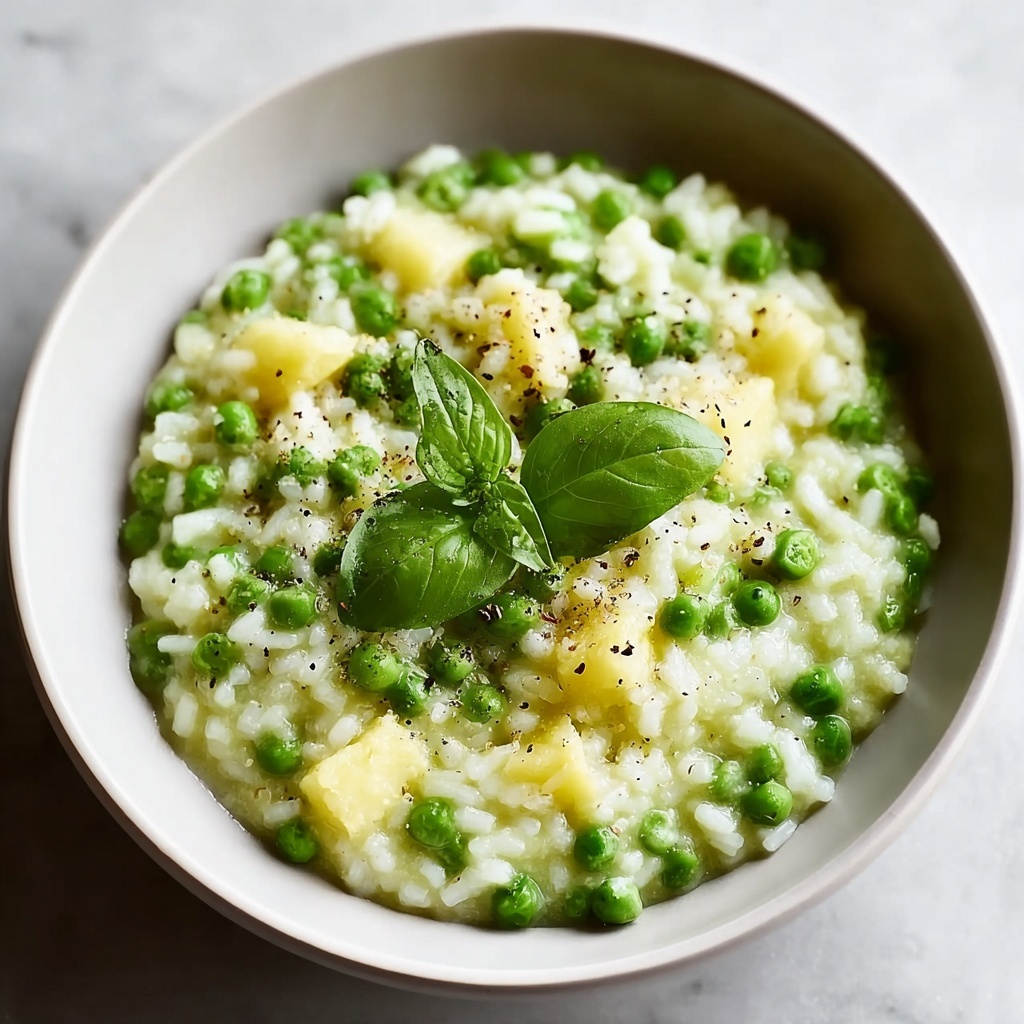
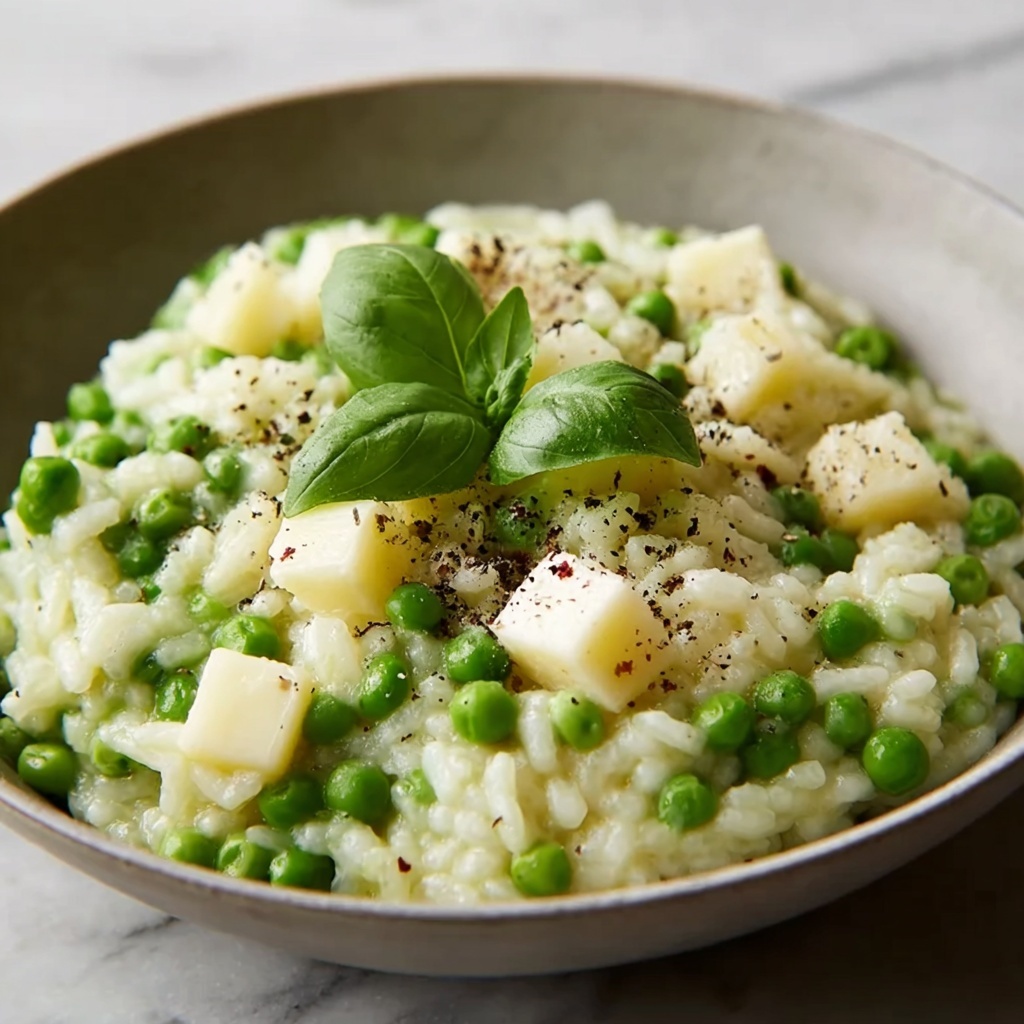
If you’re craving something creamy, comforting, and vibrant all at once, this Fresh Pea Risotto Recipe is exactly what your kitchen needs. It brings together the sweet pop of fresh peas with the rich creaminess of Parmesan and butter, all cloaked in perfectly cooked Arborio rice. Each spoonful is a delightful melody of textures and flavors, showing just how a few simple ingredients can transform into an unforgettable dish. Whether you’re cooking for family, friends, or just treating yourself, this Fresh Pea Risotto Recipe is guaranteed to impress with its freshness and comforting warmth.
Ingredients You’ll Need
With just a handful of ingredients, this recipe keeps things refreshingly simple yet totally satisfying. Each one plays a special role, from the creamy consistency the Arborio rice delivers to the bright green burst of fresh peas that lighten every bite.
- Arborio rice: The heart of any risotto, its starch makes the dish perfectly creamy.
- Fresh peas: Add a natural sweetness and vibrant color that bring the risotto to life.
- Vegetable broth: Provides depth of flavor while keeping things light and vegetarian-friendly.
- Onion: Adds a gentle sweetness and aroma when sautéed.
- Garlic: Gives a subtle but essential flavor boost that wakes up the dish.
- Parmesan cheese: Offers a savory, umami richness that smooths out every bite.
- Olive oil: For sautéing the vegetables and enhancing the overall texture.
- Butter: Adds that classic silky finish and helps the risotto feel indulgent.
- Lemon zest: The final bright note that lifts and balances the creamy richness.
How to Make Fresh Pea Risotto Recipe
Step 1: Warm the vegetable broth
Start by heating the vegetable broth in a saucepan over low heat. Keeping it warm is key because adding cold broth to the rice would slow down the cooking process and interrupt the creamy texture we’re aiming for. This simple step creates a seamless, luxurious consistency as the rice absorbs the broth gradually.
Step 2: Sauté the onion and garlic
In a large skillet, gently sauté chopped onion in olive oil until it turns translucent and soft, filling your kitchen with inviting aroma. Next, toss in minced garlic and cook just until fragrant—this pairing releases the savory base notes that make every bite deliciously aromatic without being overpowering.
Step 3: Toast the Arborio rice
Add the Arborio rice to the skillet and stir it around for about two minutes. Toasting the rice helps develop a subtle nuttiness and slightly translucent appearance. This step also primes the grains to better absorb the flavorful broth while maintaining their firm, creamy texture throughout cooking.
Step 4: Gradually add warm broth
Now comes the heart of making risotto—adding the broth a ladleful at a time. Stir continuously, allowing each addition to be fully absorbed before pouring in the next. This patient method coaxses the rice to slowly release its starch, creating that signature creamy texture while evenly distributing flavor.
Step 5: Incorporate fresh peas halfway through
About ten minutes in, when the rice is just beginning to become tender, stir in the fresh peas. They bring a lovely splash of green and a hint of natural sweetness that contrasts beautifully with the savory risotto. Continue adding broth and stirring until the rice reaches al dente perfection, somewhere between eighteen and twenty minutes total.
Step 6: Finish with butter and Parmesan
When the cooking is done, remove the skillet from heat and gently fold in butter and freshly grated Parmesan cheese. This final mix transforms the risotto into a silky, rich delight. Serve immediately with a sprinkle of lemon zest on top for a refreshing tang that cuts through the richness and brings everything together.
How to Serve Fresh Pea Risotto Recipe
Garnishes
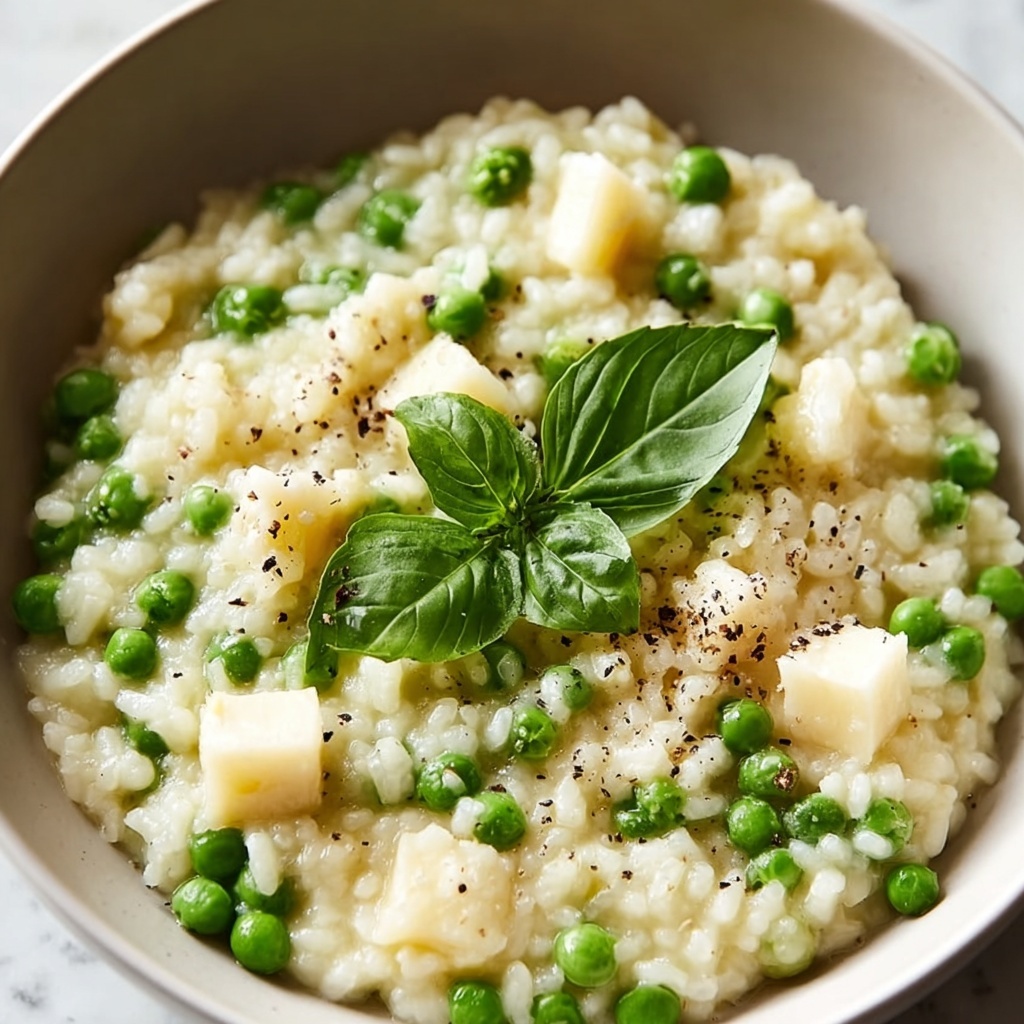
To elevate this Fresh Pea Risotto Recipe, think fresh and flavorful. A little extra Parmesan showered on top adds savory indulgence, while a twist of lemon zest keeps the dish feeling light and vibrant. Fresh herbs like mint or basil can also be wonderful companions, adding subtle herbal freshness that complements the sweet peas.
Side Dishes
Because the risotto itself is so rich and satisfying, pair it with lighter sides. A crisp green salad with a zesty vinaigrette or roasted asparagus with a drizzle of olive oil and lemon works wonderfully. If you want something heartier, grilled chicken or seared scallops are fantastic partners that won’t overpower the delicate flavors of the risotto.
Creative Ways to Present
For a show-stopping presentation, serve this Fresh Pea Risotto Recipe in shallow bowls and top with edible flowers or microgreens for a pop of color and elegance. You could also pipe the risotto into small cups for a party appetizer or layer it in a clear glass with a dollop of mascarpone and lemon zest for a stunning visual effect that invites everyone to dig in.
Make Ahead and Storage
Storing Leftovers
If you have leftovers, store them in an airtight container in the refrigerator. Risotto is best enjoyed fresh, but it will keep for up to two days. When you reheat, keep in mind that the creamy texture will thicken, so adding a splash of broth or water helps loosen it back up.
Freezing
Freezing risotto is a bit tricky since the creamy texture can become grainy once thawed. It’s best to avoid freezing this Fresh Pea Risotto Recipe. If you must freeze, do so in small portions and reheat gently with broth to bring back some creaminess.
Reheating
When reheating, warm the risotto slowly on the stovetop or microwave in short bursts. Stir frequently and add a small amount of hot broth, water, or even a splash of white wine to refresh the creaminess without drying it out.
FAQs
Can I use frozen peas instead of fresh peas?
Absolutely! Frozen peas can be a convenient substitute and will still provide sweetness and color. Just add them at the same stage as fresh peas, and adjust cooking time slightly if needed.
Is Arborio rice necessary, or can I use other rice types?
Arborio rice is best because its high starch content creates the creamy texture unique to risotto. Other short-grain rice varieties like Carnaroli or Vialone Nano work well, but long-grain or basmati rice won’t give you that signature creaminess.
Can I make this recipe vegan?
Yes! Omit the butter and Parmesan, and use a vegan butter alternative and nutritional yeast or a vegan cheese substitute for similar flavor and creaminess.
How do I know when the risotto is perfectly cooked?
The rice should be tender but still have a slight bite in the center, known as al dente. It shouldn’t be mushy but creamy enough to coat the back of a spoon.
Can I add other vegetables to this Fresh Pea Risotto Recipe?
Definitely! Asparagus tips, baby spinach, or sautéed mushrooms make excellent additions that complement the peas without overpowering the dish.
Final Thoughts
This Fresh Pea Risotto Recipe truly feels like a warm hug on a plate, perfectly marrying simple ingredients with rich, creamy textures. It’s a crowd-pleaser with an elegant touch, and once you try it, I’m sure it will become one of your go-to comfort meals. So grab those fresh peas, stir up some Arborio rice, and treat yourself to this delicious, vibrant risotto that tastes like spring in every bite.
Print
Fresh Pea Risotto Recipe
- Prep Time: 10 minutes
- Cook Time: 20 minutes
- Total Time: 30 minutes
- Yield: 4 servings
- Category: Main Course
- Method: Stovetop
- Cuisine: Italian
- Diet: Vegetarian
Description
A creamy and delicious Fresh Pea Risotto made with tender Arborio rice, sweet fresh peas, and a rich blend of Parmesan cheese, butter, and lemon zest for a perfect balance of flavors. This easy-to-make risotto is cooked on the stovetop with warm vegetable broth, making it a comforting yet elegant vegetarian dish.
Ingredients
Risotto Base
- 1 cup Arborio rice
- 4 cups vegetable broth
- 1 small onion, chopped
- 2 cloves garlic, minced
- 2 tablespoons olive oil
- 2 tablespoons butter
Add-ins & Garnish
- 1 cup fresh peas
- 1/2 cup freshly grated Parmesan cheese
- Zest of 1 lemon
Instructions
- Warm the broth: Heat the vegetable broth in a saucepan over low heat to keep it warm throughout the cooking process, which helps the rice cook evenly.
- Sauté aromatics: In a large skillet, heat olive oil over medium heat and sauté the chopped onion until translucent and soft. Add the minced garlic and cook just until fragrant, about 1 minute, to release its flavor without burning.
- Toast the rice: Add the Arborio rice to the skillet and stir continuously for about 2 minutes until the grains become slightly translucent, which helps to release starch for a creamy risotto.
- Cook with broth: Begin adding the warm vegetable broth one ladleful at a time, stirring constantly. Wait until the liquid is absorbed before adding the next ladleful. This gradual process allows the rice to absorb the broth slowly for perfect texture.
- Add peas: Approximately halfway through the cooking time (about 10 minutes in), stir in the fresh peas so they cook gently with the rice, preserving their bright flavor and color.
- Finish cooking: Continue adding broth gradually and stirring until the rice is al dente, tender but with a slight bite, typically within 18 to 20 minutes total cooking time.
- Enrich and serve: Remove the skillet from heat and stir in the butter and freshly grated Parmesan cheese until the risotto is silky and creamy. Plate immediately and garnish with lemon zest for a fresh, vibrant finish.
Notes
- Use warm broth to ensure even cooking and maintain the temperature of the risotto.
- Stir frequently to prevent the rice from sticking and to release starch for creaminess.
- For a richer flavor, use unsalted butter and adjust salt at the end as Parmesan cheese adds saltiness.
- You can substitute fresh peas with frozen peas if fresh are not available; add them frozen at the same time during cooking.
- For a vegan version, omit butter and Parmesan or substitute with vegan alternatives.