
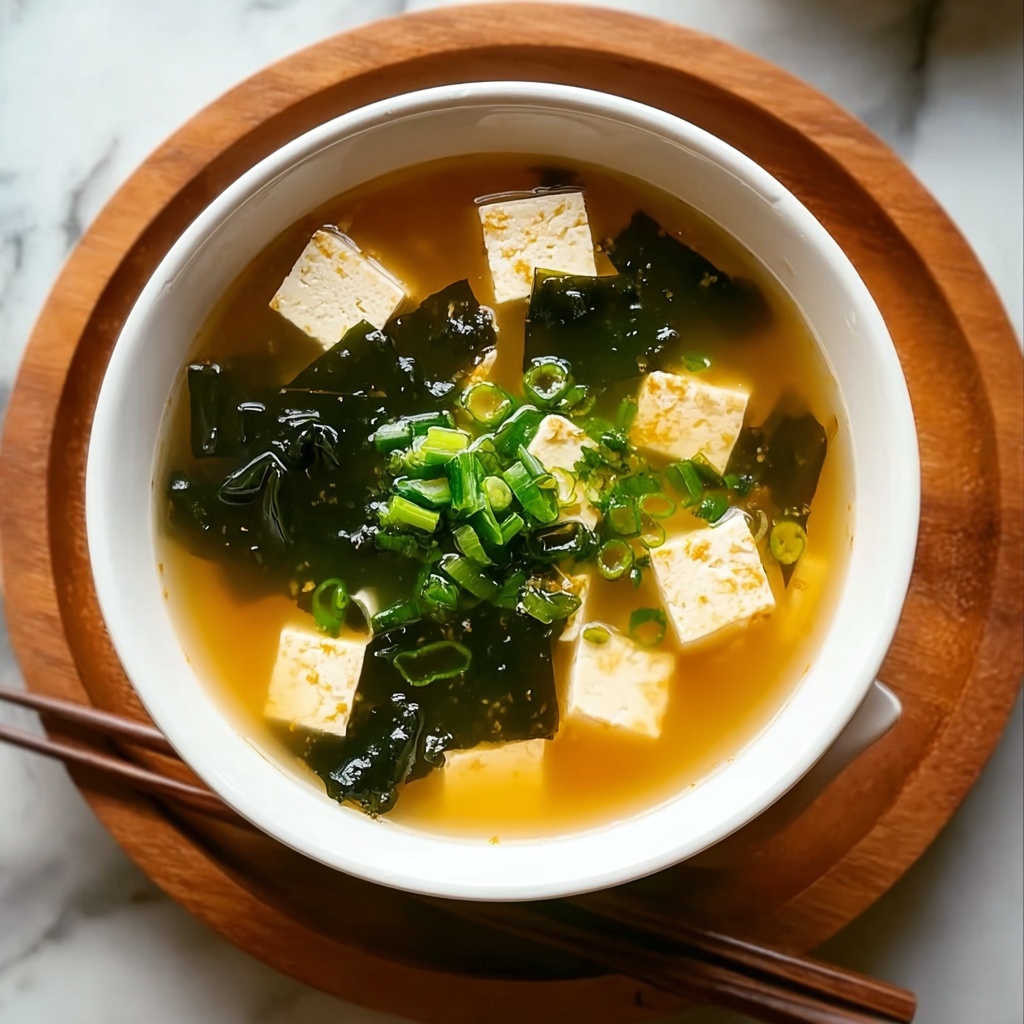
If you are craving a warm, comforting bowl that feels like a gentle hug from the inside, this Homemade Miso Soup with Tofu Recipe is an absolute must-try. It’s a beautiful harmony of silky tofu, flavorful umami-rich broth, and fresh green onions that come together in mere minutes. Whether you’re looking to soothe your soul or impress friends with a deceptively simple but deeply satisfying dish, this traditional Japanese soup will quickly become one of your go-to favorites.
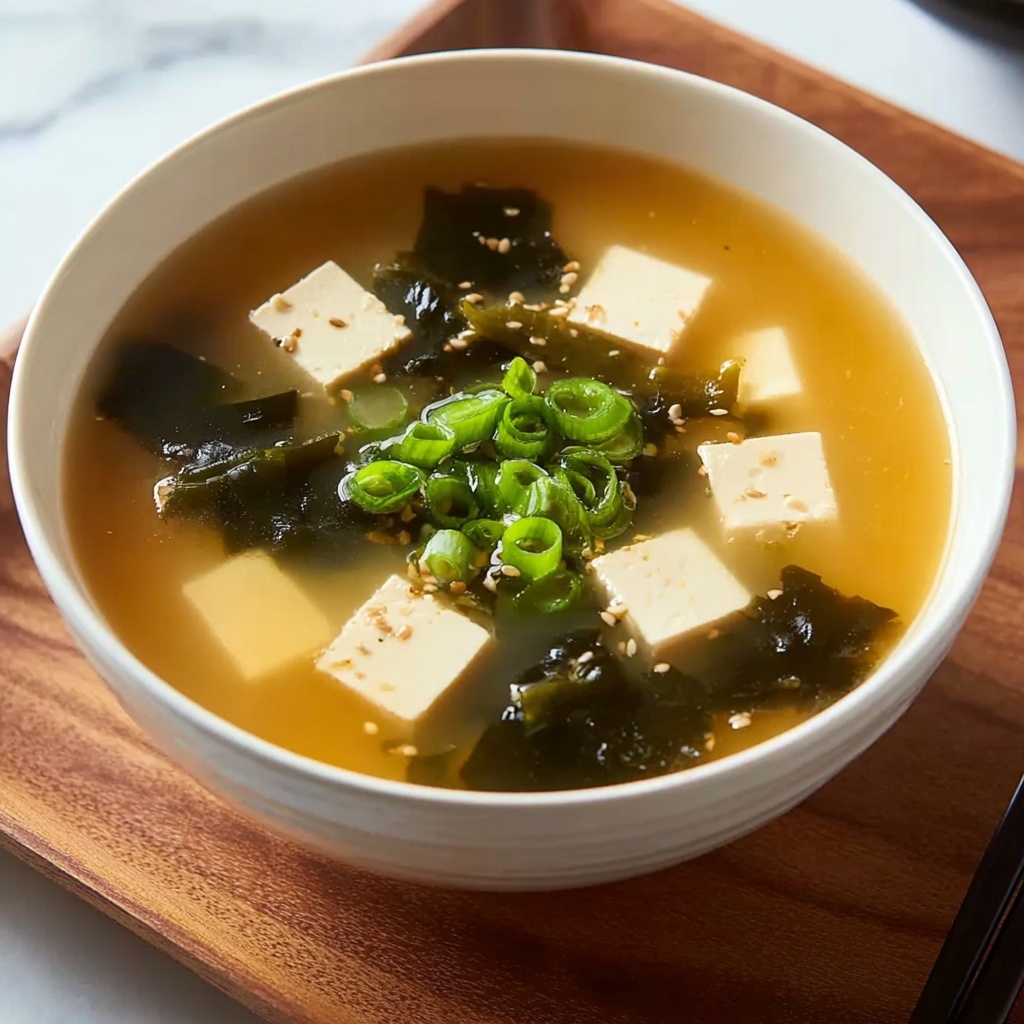
Ingredients You’ll Need
Getting the ingredients right is the secret to nailing this Homemade Miso Soup with Tofu Recipe. Each one is simple yet essential, working together to craft a broth that’s savory, smooth, and packed with texture and vibrant color.
- 4 cups water: The base for your broth, water is what will carry all the wonderful flavors.
- 1 piece kombu (dried kelp): Adds a deep umami flavor essential to authentic dashi stock.
- 1 cup katsuobushi (dried bonito flakes): These flakes bring a smoky, rich seafood essence to the broth.
- 7 oz soft/silken tofu (kinugoshi dofu): Provides luscious texture and subtle creaminess.
- 4 Tbsp miso paste: The heart of the soup, it’s packed with salty and savory goodness that defines the flavor.
- 1 Tbsp dried wakame seaweed: Adds a tender bite and lovely green color to the soup.
- 1 green onion/scallion: Fresh and crisp, it brightens up the dish with a mild oniony kick.
How to Make Homemade Miso Soup with Tofu Recipe
Step 1: Prepare the Dashi Broth
The foundation of this soup is the dashi, a traditional Japanese stock brimming with umami. Start by adding 4 cups of water and the piece of kombu to a saucepan. Slowly bring it to a gentle boil—this step extracts the rich, savory flavors from the kelp. Just before the water boils, remove the kombu to avoid bitterness. If you’re not vegetarian, add the katsuobushi flakes next. Simmer for a few minutes to deepen the flavor, then strain out the bonito flakes. Now, you have a nourishing base ready to transform your soup.
Step 2: Prep the Tofu, Wakame, and Green Onion
While the dashi is simmering, carefully cut the silken tofu into small cubes. This delicate tofu will melt gently in the soup, so handle it with care. Next, soak the dried wakame briefly in cold water to rehydrate it, then drain. Finally, slice the green onion into thin rounds to add a fresh note right before serving.
Step 3: Combine and Heat Gently
Pour your prepared dashi back into the pot and warm over low heat. Stir in your miso paste carefully—avoid boiling once the miso is added to preserve its complex flavors and beneficial probiotics. Gently add the tofu cubes and wakame, letting everything warm through for just a few minutes. This step brings everything together in a harmonious bowl of umami delight.
Step 4: Serve Immediately
The soup is best enjoyed fresh and hot. Ladle it into bowls, sprinkle the green onion on top, and dive in while it’s warm. Each spoonful bursts with comforting flavors and a silky texture that feels like you’re savoring a piece of Japan’s culinary soul.
How to Serve Homemade Miso Soup with Tofu Recipe
Garnishes
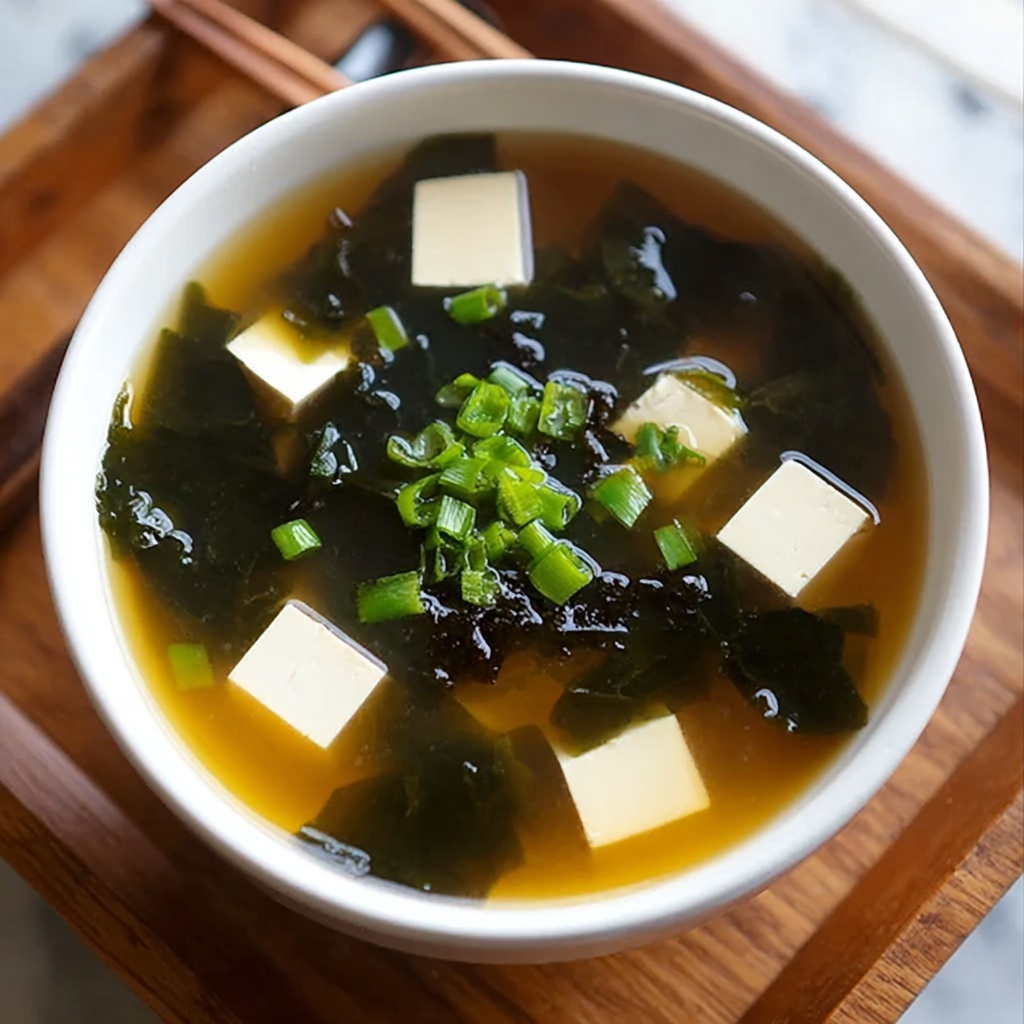
Adding garnishes to your miso soup can truly elevate the experience. Freshly sliced green onions add brightness, while a sprinkle of toasted sesame seeds brings a subtle nuttiness. For a bit of heat, try a small pinch of shichimi togarashi, a Japanese chili pepper blend. These finishing touches not only enhance flavor but add appealing texture and color to the bowl.
Side Dishes
Miso soup pairs beautifully with a range of side dishes. Think steamed rice, delicate vegetable tempura, or even a light cucumber salad dressed with rice vinegar. Together, these sides complete a well-rounded meal that balances warmth, freshness, and crispness in every bite.
Creative Ways to Present
Presentation adds a special touch to this humble soup. Serve your Homemade Miso Soup with Tofu Recipe in rustic earthenware bowls to bring out its earthy, authentic vibe. Floating edible flowers or tiny spirals of seaweed can add an unexpected twist. Even a simple wooden tray paired with chopsticks sets the mood for an immersive dining experience.
Make Ahead and Storage
Storing Leftovers
If you make extra soup, store it in an airtight container in the refrigerator for up to 2 days. Since miso soup changes texture over time, especially the tofu, it’s best to enjoy leftovers quickly to maintain its fresh taste and tender feel.
Freezing
Freezing miso soup is generally not recommended because the delicate texture of silken tofu and seaweed tends to deteriorate. However, if you must freeze it, transfer to a freezer-safe container and use within one month. Expect some changes in texture upon thawing.
Reheating
When reheating, warm the soup gently over low heat. Avoid boiling as this can alter the flavor and ruin the miso’s nuanced character. Stir carefully and consider adding a fresh sprinkle of green onions before serving to revive its vibrant appeal.
FAQs
Can I make this Homemade Miso Soup with Tofu Recipe vegetarian or vegan?
Absolutely! Simply skip the bonito flakes (katsuobushi) in the dashi and rely on kombu and shiitake mushrooms if you want extra depth. Use a plant-based miso paste to keep it vegan-friendly without losing any of the rich umami flavors.
What type of miso paste should I use?
There are several varieties of miso, from white (shiro) to red (aka). White miso offers a mild, sweeter flavor while red miso is stronger and saltier. For this soup, white miso is typically preferred for its delicate balance, but feel free to experiment based on your taste preference.
Can I use firm tofu instead of soft tofu?
Yes, firm tofu works too but it will give your soup a different texture — a bit chewier and less creamy. Soft or silken tofu is traditional because it melts gently into the broth, but firm tofu is a fine substitution if that’s what you have on hand.
How important is the kombu for the broth?
Kombu is essential for authentic dashi because it provides the signature umami that defines this soup. Without it, the broth will taste flat. If you don’t have kombu, adding dried shiitake mushrooms can offer some umami, but nothing quite compares to the distinctive flavor kombu brings.
Is it okay to make the broth in advance?
Definitely! You can prepare the dashi broth ahead of time and refrigerate it for up to 2 days. This makes assembling your Homemade Miso Soup with Tofu Recipe even quicker when you want a comforting bowl in minutes.
Final Thoughts
This Homemade Miso Soup with Tofu Recipe captures the essence of simplicity and tradition while delivering a nourishing, flavorful experience that anyone can make at home. It’s perfect for chilly evenings, quick lunches, or whenever you need a cozy moment. I encourage you to give it a try—once you taste its delicate yet vibrant flavors, it will become a cherished classic in your kitchen too.
Print
Homemade Miso Soup with Tofu Recipe
- Prep Time: 5 minutes
- Cook Time: 15 minutes
- Total Time: 20 minutes
- Yield: 4 servings
- Category: Soup
- Method: Stovetop
- Cuisine: Japanese
- Diet: Low Fat
Description
This Homemade Miso Soup with Tofu recipe offers a warm, comforting Japanese classic prepared from scratch, featuring a flavorful dashi broth made from kombu and bonito flakes, soft silken tofu, wakame seaweed, and fresh green onions. Perfect for a light, nutritious starter or a simple meal, ready in just 20 minutes.
Ingredients
Dashi Broth
- 4 cups water
- 1 piece kombu (dried kelp), approx. ⅓ oz (10 g), 4 x 4 inches (10 x 10 cm)
- 1 cup katsuobushi (dried bonito flakes), loosely packed (about 3 cups for stronger flavor)
Miso Soup
- 7 oz soft/silken tofu (kinugoshi dofu)
- 4 Tbsp miso paste (approx. 1 Tbsp or 18 g per 1 cup of dashi)
- 1 Tbsp dried wakame seaweed
- 1 green onion/scallion, thinly sliced
Instructions
- Prepare Ingredients. Gather all ingredients and slice the green onion into thin rounds to garnish later.
- Make Dashi Broth. Place 4 cups of water and one piece of kombu in a saucepan. Slowly heat the water until just before boiling, then remove the kombu to avoid bitterness. If not vegetarian, add the bonito flakes to the hot water, simmer for a few minutes to extract flavor, then strain the broth to remove flakes, resulting in a clear dashi stock.
- Prepare Soup Base. Pour the prepared dashi into a pot and bring it to a gentle simmer over medium heat.
- Add Miso Paste. Lower the heat to prevent boiling and whisk in the miso paste until fully dissolved, preserving its delicate flavor.
- Add Tofu and Wakame. Gently add cubed soft/silken tofu and dried wakame seaweed to the pot. Heat through carefully to avoid breaking the tofu.
- Finish and Serve. Add the sliced green onion to the soup, give a gentle stir, then serve immediately while hot to enjoy the fresh flavors.
Notes
- For a vegetarian or vegan version, skip the bonito flakes and rely on kombu and shiitake mushrooms for dashi flavor.
- Do not boil the miso paste after adding it; high heat destroys its delicate taste and beneficial probiotics.
- Adjust the amount of miso paste according to your preferred saltiness and flavor intensity.
- Use soft or silken tofu for the best texture in miso soup.
- Dried wakame expands significantly when rehydrated; 1 tablespoon is enough for 4 servings.