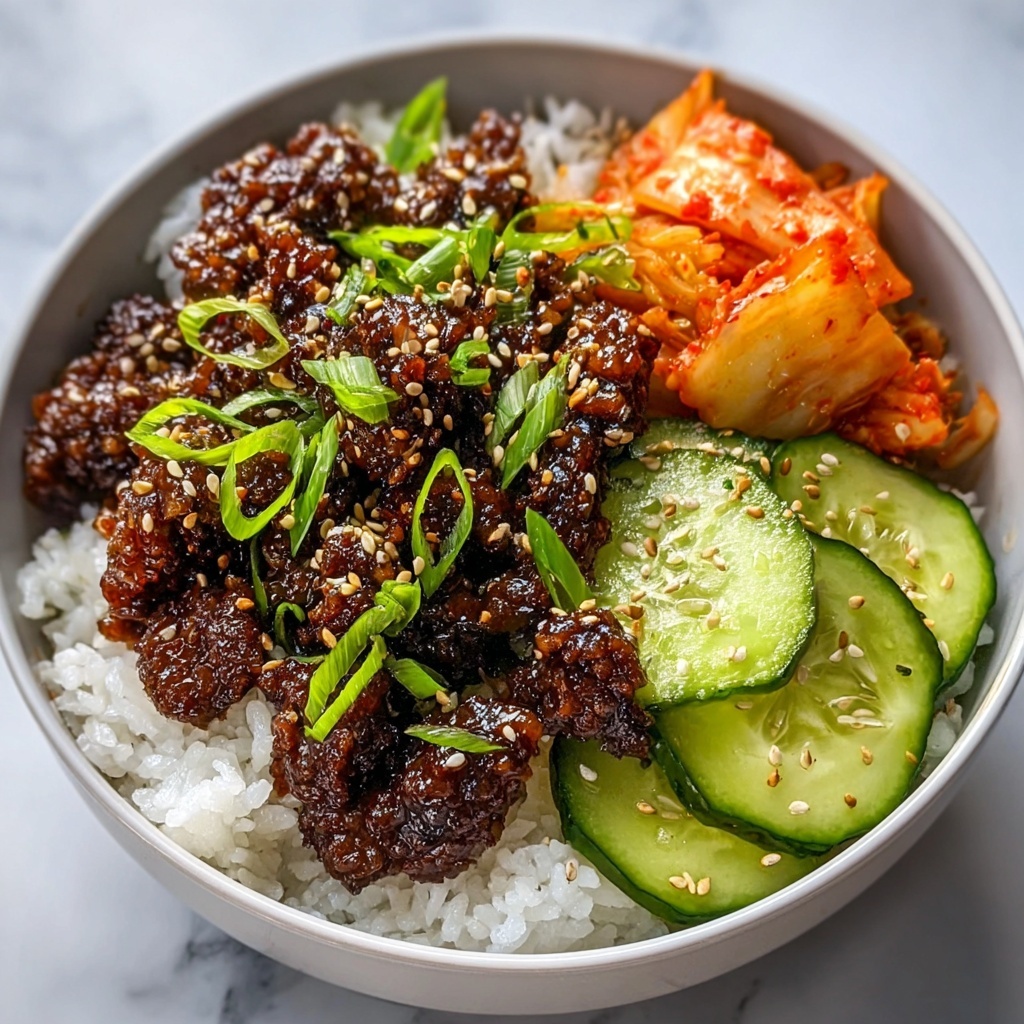
If you love dishes bursting with bold, umami-rich flavors and vibrant textures, you are going to adore this Korean Ground Beef Bowl with Gochujang and Vegetables Recipe. It’s a perfect harmony of spicy, sweet, and savory notes, anchored by tender, flavorful ground beef and fresh, crisp vegetables. Every bite feels like a warm, comforting hug, yet it’s bright and fresh enough to keep you coming back for more. This dish manages to be incredibly satisfying without any fuss, making it a fantastic weeknight dinner or a lively choice when you want something a little exciting on your plate.
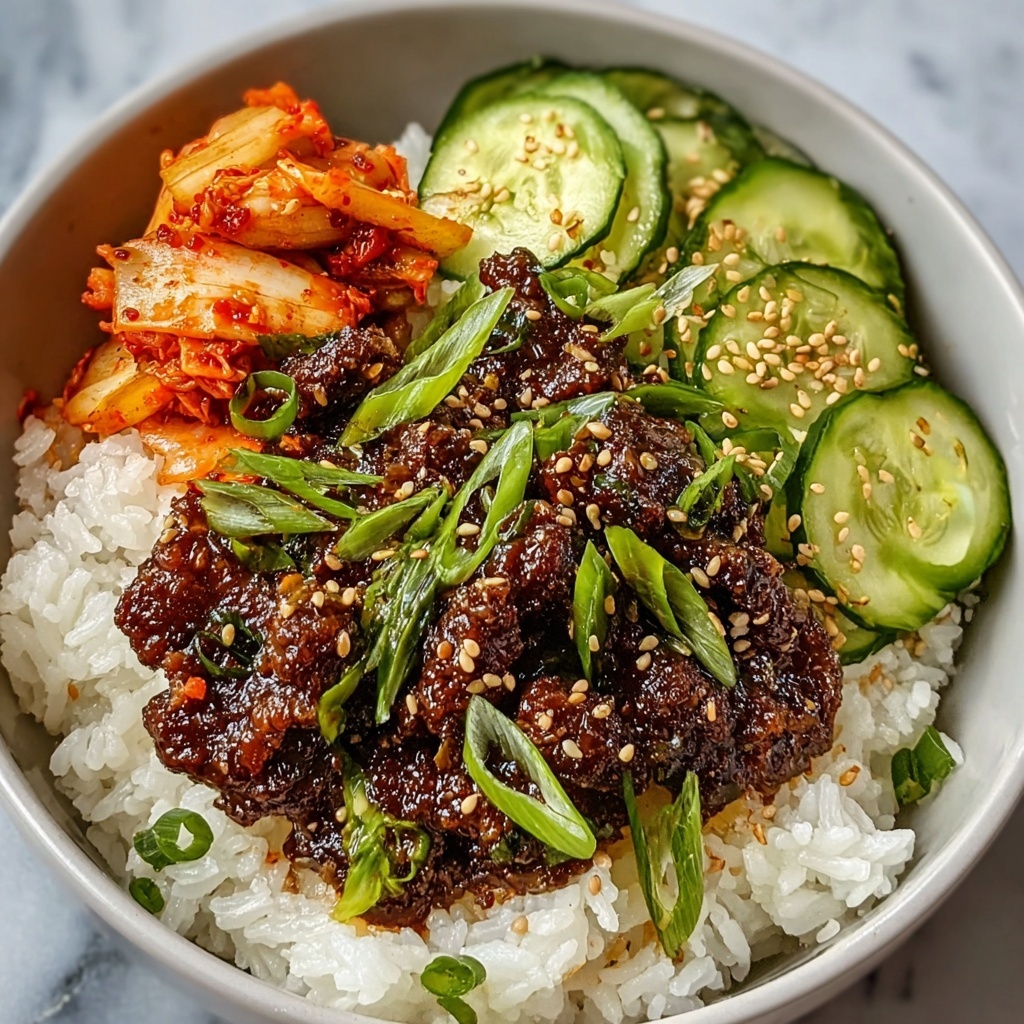
Ingredients You’ll Need
This recipe calls for simple, accessible ingredients that each play a crucial role in building layers of taste and texture. From the punchy heat of gochujang to the cool crunch of fresh cucumber, every element is thoughtfully chosen to create a perfectly balanced bowl.
- Lean ground beef: The hearty protein center that soaks up all the delicious sauce flavors.
- Gochujang: A Korean chili paste that adds smoky spice and subtle sweetness.
- Soy sauce: Enhances the savory depth and brings a salty nuance.
- Brown sugar: Balances the spice with a gentle, caramel sweetness.
- Garlic and fresh ginger: The aromatic building blocks that make the dish irresistibly fragrant.
- Toasted sesame oil: Adds a rich, nutty aroma and silky mouthfeel.
- Green onions: For a fresh, oniony crunch and pop of color.
- Cooked short-grain rice: The comforting base that absorbs all the saucy goodness.
- Cooked edamame: Adds a bright, slightly sweet bite and a boost of protein.
- Cucumber: Provides refreshing crispness and lightness.
- Carrot: Adds natural sweetness and a pleasantly crunchy contrast.
- Kimchi: Brings an iconic fermented tang and a spicy kick.
- Toasted sesame seeds: The perfect finishing touch for extra texture and nuttiness.
How to Make Korean Ground Beef Bowl with Gochujang and Vegetables Recipe
Step 1: Bloom the Aromatics
Start by heating the toasted sesame oil in a large skillet over medium heat. Add the minced garlic and fresh ginger, stirring them around for about a minute until their enticing fragrance fills your kitchen. This step is key to building flavor right from the start and sets the stage for a delicious beef mixture.
Step 2: Cook the Ground Beef
Next, add the lean ground beef to the skillet. Use a spatula to break the meat apart as it browns evenly, cooking it for 5 to 6 minutes until no pink remains. The browned bits sticking to the pan are gold—they’ll enhance the depth of the sauce that comes next.
Step 3: Build the Sauce
Now it’s time to stir in your gochujang, soy sauce, and brown sugar. Let the mixture cook for 2 to 3 minutes so the sauce thickens slightly and perfectly coats the beef. This blend of spicy, salty, and sweet flavors transforms the dish into something truly special.
Step 4: Finish the Beef Preparation
Once the sauce has thickened and the beef is fully cooked, remove the skillet from heat. Stir in half of your sliced green onions—they add a wonderful pop of freshness at this stage, marrying well with the rich beef and sauce.
Step 5: Assemble the Bowls
Divide the cooked short-grain rice evenly among four bowls as your base. Pile on the gochujang-seasoned ground beef, then add the cooked edamame, crisp cucumber slices, julienned carrots, and chopped kimchi on top. Each component brings its own delightful texture and flavor, making every bite complex and satisfying.
Step 6: Garnish and Serve
Finally, sprinkle the remaining green onions and toasted sesame seeds over each bowl. These final touches add lovely color and crunch, rounding out the dish perfectly. Serve your Korean Ground Beef Bowl with Gochujang and Vegetables Recipe immediately to enjoy all the fresh contrasts at their best.
How to Serve Korean Ground Beef Bowl with Gochujang and Vegetables Recipe
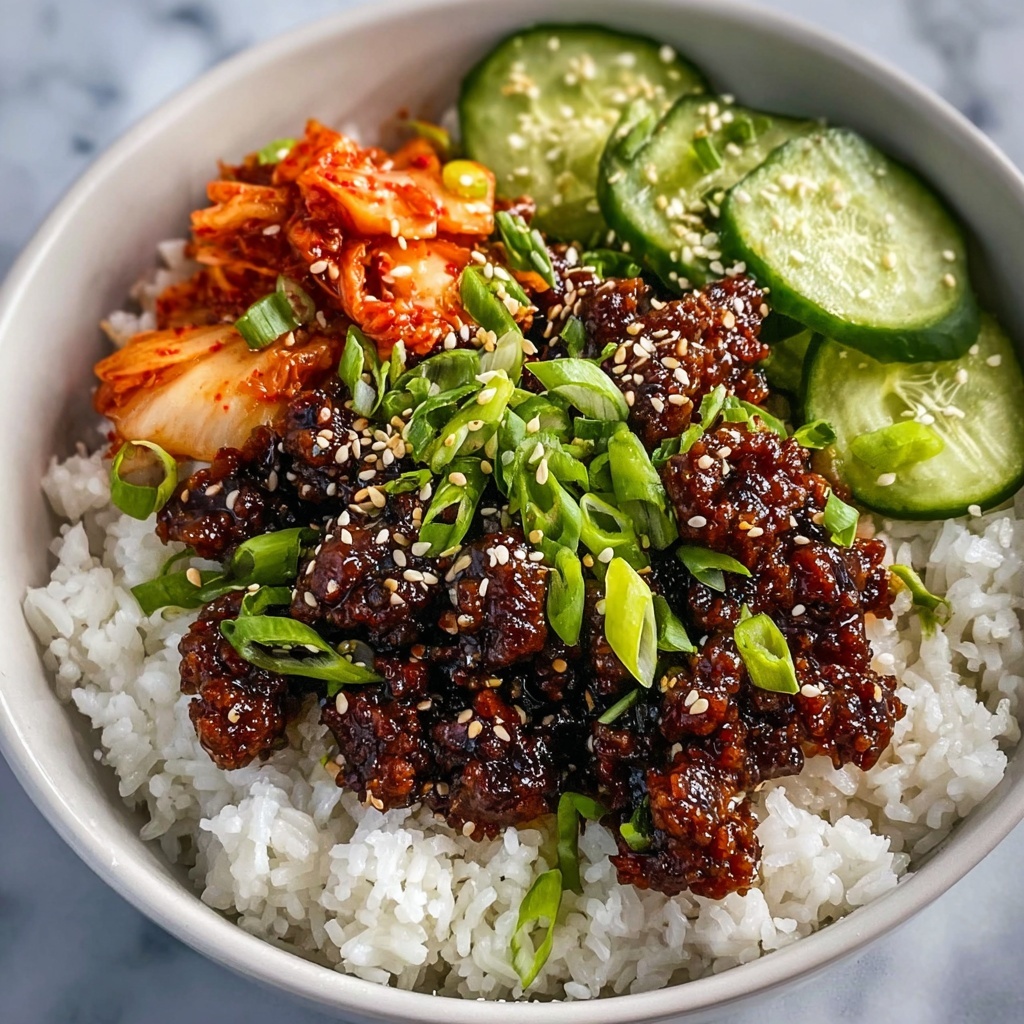
Garnishes
Add a sprinkle of extra toasted sesame seeds or thinly sliced scallions for an added burst of flavor and texture. If you like an extra layer of spice, a few drops of sesame oil or an extra dab of gochujang on top can elevate the bowl to restaurant-quality deliciousness.
Side Dishes
This dish pairs beautifully with light, simple sides such as steamed bok choy or a crisp green salad tossed in a tangy sesame dressing. A small bowl of miso soup would also complement the bold flavors here perfectly, offering warmth and umami alongside the spicy beef bowl.
Creative Ways to Present
For a fun presentation, consider serving this dish in mini stone bowls to keep it warm longer and add an authentic touch. You can also turn it into a lettuce wrap platter by offering butter lettuce leaves alongside so everyone can build their own fresh, crunchy wraps bursting with flavor and texture.
Make Ahead and Storage
Storing Leftovers
Once cooled to room temperature, transfer any leftover beef mixture and vegetables to an airtight container. Stored in the refrigerator, the components will stay fresh for up to 3 days, making for an easy and flavorful next-day meal.
Freezing
You can freeze the cooked ground beef mixture (without the fresh vegetables) in a freezer-safe container or bag for up to 2 months. When ready to eat, thaw overnight in the refrigerator and reheat gently to maintain the best texture and flavor.
Reheating
Reheat leftovers on the stovetop over medium heat or in the microwave until warmed through, adding a splash of water or sesame oil if needed to keep the beef moist. For the freshest texture, add any raw vegetables or kimchi right before serving.
FAQs
Can I use a different type of meat for this Korean Ground Beef Bowl with Gochujang and Vegetables Recipe?
Absolutely! Ground turkey or chicken can be used as lighter alternatives, though beef adds richer flavor. If you prefer plant-based options, crumbled tofu or a meat substitute could work nicely too.
How spicy is this recipe with gochujang?
Gochujang has a moderate level of heat paired with sweetness. If you prefer less spice, start with a smaller amount and adjust to your taste. Adding more kimchi or cucumber can also help balance the heat.
Is this dish gluten-free?
To ensure this Korean Ground Beef Bowl with Gochujang and Vegetables Recipe is gluten-free, use gluten-free soy sauce and check that your gochujang is gluten-free, as some brands contain wheat.
Can I prepare this dish ahead of time for meal prep?
Yes! The beef mixture can be made in advance and refrigerated or frozen. Assemble fresh vegetables when ready to eat to keep them crisp and vibrant.
What kind of rice works best for this recipe?
Short-grain white rice is traditional here because it’s sticky and holds the bowl together nicely, but jasmine rice or even brown rice can be delicious substitutions if you want a different texture or a whole-grain option.
Final Thoughts
This Korean Ground Beef Bowl with Gochujang and Vegetables Recipe is one of those dishes that feels like a celebration every time you make it. The combination of bold flavors, fresh veggies, and comforting rice creates a meal you will want to share again and again. I can’t wait for you to try it and discover just how easy and satisfying Korean-inspired cooking can be in your own kitchen!
Print
Korean Ground Beef Bowl with Gochujang and Vegetables Recipe
- Prep Time: 10 minutes
- Cook Time: 15 minutes
- Total Time: 25 minutes
- Yield: 4 servings
- Category: Main Course
- Method: Stovetop
- Cuisine: Korean
Description
This Korean Ground Beef Bowl is a flavorful and quick meal combining savory and spicy gochujang-seasoned ground beef with fresh vegetables, kimchi, and rice. Ideal for a weeknight dinner, it blends the rich umami of toasted sesame oil and soy sauce with the refreshing crunch of cucumber and carrot, offering a balanced and satisfying dish inspired by Korean cuisine.
Ingredients
Beef and Sauce
- 1 pound lean ground beef
- 2 tablespoons gochujang
- 2 tablespoons soy sauce
- 1 tablespoon brown sugar
- 2 cloves garlic, minced
- 1 tablespoon fresh ginger, minced
- 1 tablespoon toasted sesame oil
- 2 green onions, thinly sliced
Bowls and Toppings
- 4 cups cooked short-grain rice
- 1 cup cooked edamame
- 1 cup cucumber, thinly sliced
- 1 cup carrot, julienned
- 1 cup kimchi, chopped
- 2 tablespoons toasted sesame seeds
Instructions
- Bloom aromatics: Heat sesame oil in a large skillet over medium heat. Add minced garlic and ginger, sautéing for about 1 minute until fragrant and aromatic.
- Cook ground beef: Add the ground beef to the skillet. Cook, breaking up the meat with a spatula, until the beef is browned and fully cooked through, approximately 5 to 6 minutes.
- Build sauce: Stir in gochujang, soy sauce, and brown sugar into the cooked beef. Continue cooking for 2 to 3 minutes, allowing the sauce to thicken and coat the beef evenly.
- Finish beef preparation: Remove the skillet from heat and stir in half of the sliced green onions to add freshness and flavor.
- Assemble bowls: Divide the cooked short-grain rice evenly among four serving bowls. Top each bowl with the gochujang beef mixture, cooked edamame, sliced cucumber, julienned carrot, and chopped kimchi for added texture and flavor complexity.
- Garnish and serve: Sprinkle the remaining sliced green onions and toasted sesame seeds over each bowl for garnish. Serve immediately while warm.
Notes
- For less spice, reduce the amount of gochujang or omit it entirely.
- Use lean ground beef for a healthier option and to reduce excess grease.
- Short-grain rice is best for this dish due to its sticky texture, but jasmine rice works as an alternative.
- Kimchi adds authentic Korean flavor and probiotic benefits; omit if unavailable or substitute with pickled vegetables.
- This recipe can be made gluten-free by using tamari or a gluten-free soy sauce alternative.