Description
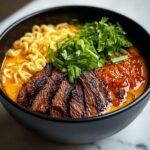
Experience the rich and spicy flavors of authentic Korean cuisine with this easy-to-make Spicy Korean Ramen recipe. Featuring a savory broth infused with gochujang, fresh vegetables, and tender noodles, this dish is perfect for a comforting meal that can be customized with your favorite toppings.
Ingredients
Scale
Main Ingredients
- 2 packs of instant ramen noodles (preferably spicy flavor)
- 4 cups of water
- 1 tablespoon of vegetable oil
- 2 cloves of garlic, minced
- 1 small onion, thinly sliced
- 1 medium carrot, julienned
- 1 cup of shiitake mushrooms, sliced
- 1 cup of baby spinach
- 1 tablespoon of gochujang (Korean chili paste)
- 1 tablespoon of soy sauce
- 1 teaspoon of sesame oil
- 1 teaspoon of sugar
Garnishes & Optional
- 1 green onion, chopped (for garnish)
- 1 boiled egg (optional, for topping)
- Sesame seeds (for garnish)
- Optional toppings: kimchi, seaweed, chili oil
Instructions
- Sauté Aromatics: In a large pot, heat the vegetable oil over medium heat. Once hot, add the minced garlic and sliced onion. Sauté for about 2-3 minutes until the onions become translucent and fragrant.
- Add Vegetables: Add the julienned carrot and sliced shiitake mushrooms to the pot. Stir and cook for another 3-4 minutes until the vegetables start to soften.
- Add Water and Boil: Pour in the 4 cups of water and bring to a gentle boil, stirring occasionally to prevent sticking.
- Add Seasonings: Once boiling, add the gochujang, soy sauce, sesame oil, and sugar. Stir well to combine.
- Simmer Broth: After the broth has simmered for about 5 minutes, add the ramen noodles, ensuring they are submerged. Cook according to package instructions, usually around 3-4 minutes.
- Add Spinach: As the noodles cook, add the baby spinach to the pot. Stir to ensure the spinach is evenly distributed.
- Adjust Seasoning: Once the noodles are cooked to your liking, taste the broth and adjust seasoning if necessary. Add more gochujang or red pepper flakes for extra spice if desired.
- Prepare Boiled Egg: If using a boiled egg, prepare it now by boiling for 6-7 minutes for a slightly runny yolk. Peel and slice in half.
- Serve Ramen: Ladle the spicy ramen into bowls, including broth, noodles, and vegetables.
- Add Garnishes: Top each bowl with half of a boiled egg, chopped green onions, and a sprinkle of sesame seeds.
- Optional Toppings: For extra flavor, consider adding toppings like kimchi, seaweed, or a drizzle of chili oil.
- Enjoy: Grab your chopsticks or a fork, and enjoy your delicious homemade spicy Korean ramen!
- Sip the Broth: Sip on the flavorful broth, packed with goodness from the vegetables and the spicy kick from the gochujang.
- Store Leftovers: Store leftovers in an airtight container in the fridge. Add a splash of water when reheating to restore the broth.
- Experiment: Feel free to experiment with different vegetables or proteins like tofu, chicken, or shrimp for a heartier meal.
Notes
- Use spicy flavored ramen to enhance the heat, or add extra gochujang for a stronger kick.
- Boiled egg is optional but adds richness and protein.
- Adjust cooking times based on your preferred noodle texture.
- Feel free to substitute shiitake mushrooms with other mushrooms or vegetables.
- Store leftovers properly and reheat with water to maintain broth consistency.
- Try adding kimchi or chili oil for authentic Korean toppings.
- Be cautious with soy sauce if aiming for low sodium intake.
